
How Many Lucky Dips Have Won The Lottery In The UK?
For many people in the UK, buying a lottery ticket is a familiar pastime. For those who prefer not to pick their own numbers, the Lucky Dip option offers a simple alternative, giving a ticket with randomly selected numbers.
Given its popularity, it’s natural to wonder whether Lucky Dip tickets ever win significant prizes. Many players are curious if there is any noticeable difference in outcomes between choosing your own numbers and relying on a Lucky Dip.
This guide looks at Lucky Dips in the UK lottery, examining their track record, a comparison with self-selected numbers, and practical points to consider if you’re thinking of using one.
Read on to learn more.
Has Anyone Won The Lottery On A Lucky Dip?
Yes, Lucky Dip tickets have produced some of the UK’s largest lottery wins. The National Lottery treats all tickets equally when determining winners.
For instance, in May 2022, a couple from Gloucester won a record-breaking EuroMillions prize worth over £184 million with a Lucky Dip ticket. This remains one of the largest wins in UK history.
Many other examples exist, including Lotto tickets purchased as Lucky Dips that led to multi-million-pound wins. Smaller prizes are also regularly claimed by Lucky Dip players, sometimes with repeated success across draws.
These examples show that, while the numbers are randomly generated, Lucky Dip tickets may achieve substantial wins.
Lucky Dip vs Own Numbers: What Has Better Odds?
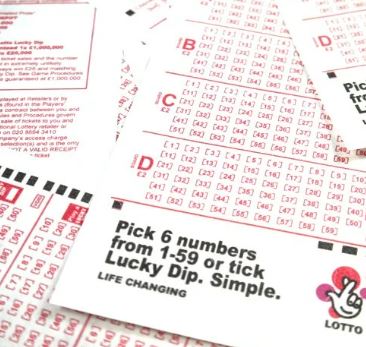
Statistically, there is no advantage to choosing Lucky Dip numbers over self-selected ones. The process used by the National Lottery is random, so each combination has the same chance of being drawn.
Whether players pick dates, personal favourites, or rely on a Lucky Dip, the draw does not favour any approach. While some believe that personal selection gives an edge, this is a common misunderstanding.
It’s also worth noting that buying additional tickets increases the total number of entries you have, but this does not make any single ticket more likely to win.
Why People Think Lucky Dips Are Less Likely To Win
Despite evidence to the contrary, many assume Lucky Dips are less successful. This perception often arises from psychological factors rather than probability.
For example, people tend to form an emotional attachment to self-selected numbers. Wins achieved with these numbers can feel more personal, while those with Lucky Dips may seem less memorable.
Another factor is selective memory: players often recall big wins from self-selected numbers but forget that Lucky Dip tickets have also secured major prizes.
Research and official reports confirm that all number combinations have the same chance of being drawn. There is no inherent bias against Lucky Dip tickets—the belief they are less likely to win is largely due to perception rather than fact.
Is It Better To Buy A Lucky Dip?
From a purely numerical perspective, there is no edge to using Lucky Dip tickets over choosing numbers yourself. Each ticket has the same likelihood of producing a prize.
Some players might appreciate Lucky Dips for convenience, while others prefer the personal meaning of their chosen numbers. Lucky Dip tickets may occasionally reduce the chance of sharing a prize if the numbers selected are less common than date-based combinations.
Ultimately, the choice comes down to personal preference. If you choose to play, it’s important to treat tickets as a form of entertainment rather than a source of income. Consider your spending carefully and set limits that keep playing responsible.
How Many Lucky Dips Can You Buy?
If you wish to enter multiple times, it is possible to purchase more than one Lucky Dip ticket for a single draw. Limits depend on the game and whether you’re buying online or in a shop.
For Lotto, online slips generally allow up to ten lines, and each may be a Lucky Dip. Retailers may have their own restrictions, but most players might buy several entries if desired.
Purchasing more tickets increases your total number of entries, but it does not alter the chance of any one ticket winning. Players should balance the number of tickets with their budget and play responsibly.
Set personal spending limits, take breaks, and remember that the lottery is meant as entertainment. If playing starts to affect your finances or well-being, free confidential support is available through organisations such as GamCare or GambleAware.
**The information provided in this blog is intended for educational purposes and should not be construed as betting advice or a guarantee of success. Always gamble responsibly.
